Brentwood Flats vs Hills: Choosing the Right Lifestyle
May 28, 2026
May 28, 2026
If you picture Brentwood as one single lifestyle, you may miss what actually makes it so appealing. In this part of Los Angeles, a few shifts in topography can change how your days feel, from coffee-and-errands on foot to quiet mornings framed by canyon views. If you are deciding where in Brentwood to focus your search, understanding the flats and the hills can help you choose a setting that fits the way you want to live. Let’s dive in.
Brentwood works more like a collection of micro-areas than a single neighborhood. City planning documents distinguish between pedestrian-oriented village areas and lower-intensity hillside areas shaped by topography, street access, utilities, fire protection, and view preservation.
That means the daily rhythm can change significantly depending on where you are. Some pockets feel connected to shops and local routines, while others feel more tucked away and residential. In practical terms, the flats and the hills often attract buyers looking for very different kinds of convenience.
If you want a more walkable routine, the flatter areas of Brentwood are usually the strongest match. The adopted community plan identifies Brentwood Village and portions of San Vicente Boulevard as pedestrian-oriented areas, with design standards that support street activity and place parking to the rear or underground.
This planning approach shapes how the area feels day to day. Storefronts, low- and mid-rise buildings, and nearby services create an environment where errands and casual stops can be more integrated into your routine.
The San Vicente corridor is described in city planning documents as a pedestrian-oriented mixed corridor. It includes storefront retail, two-story strip malls, and subterranean parking, all of which support a more active street presence.
For many buyers, that translates into practical ease. You may find it simpler to build your day around nearby stops instead of treating every outing as a separate drive.
The flatter core is reinforced by well-known neighborhood amenities. The Brentwood Branch Library is on San Vicente, Barrington Recreation Center is on Barrington Avenue, and the Brentwood Farmers Market operates in the neighborhood core.
These kinds of amenities help explain why the flats often feel more connected and active. Even when you are not looking for an urban environment, you may still value having useful destinations woven into everyday life.
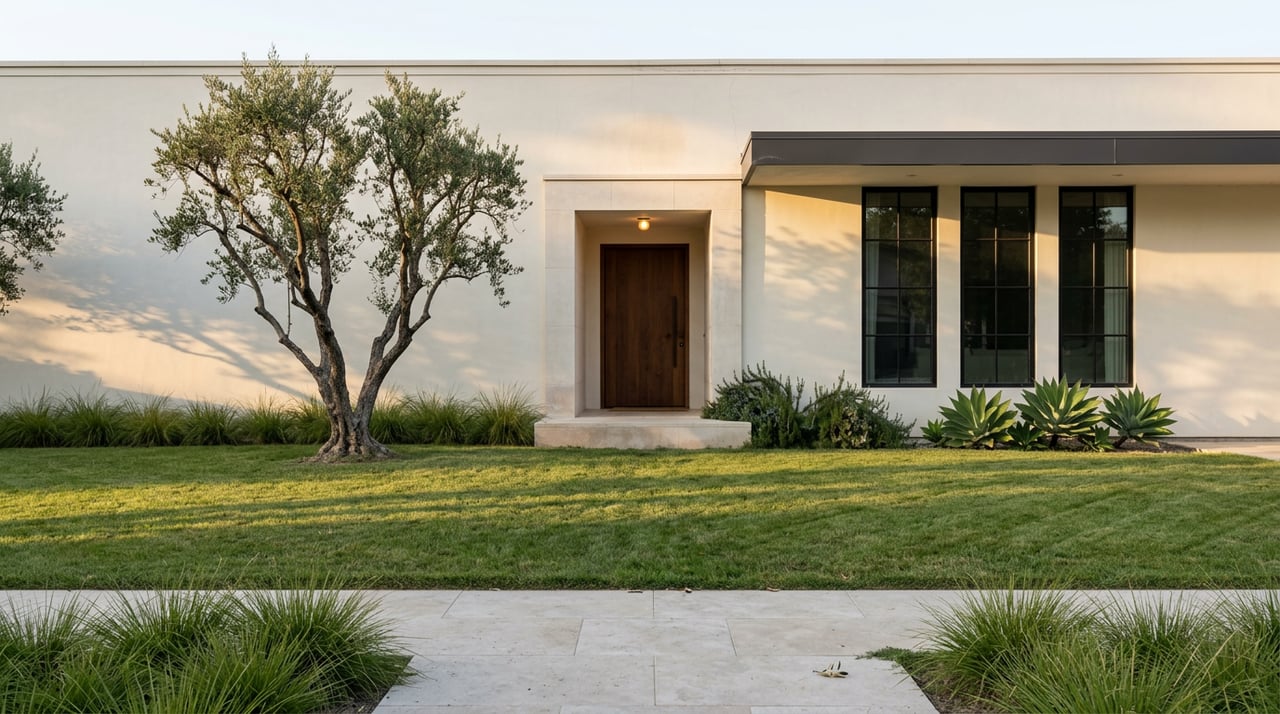
The flats are not defined by a single home type. Survey materials describe Brentwood Park as an early streetcar suburb with curvilinear streets, landscaped traffic circles, large lots, deep setbacks, and homes in Period Revival, Ranch, and early Modern styles.
Elsewhere in the flatter parts of Brentwood, the same survey identifies a 1950s Mid-Century Modern garden apartment complex on South Barrington Avenue and Spanish Colonial Revival institutional buildings, including Brentwood Science Magnet School. That mix helps the flats feel established and layered rather than uniform.
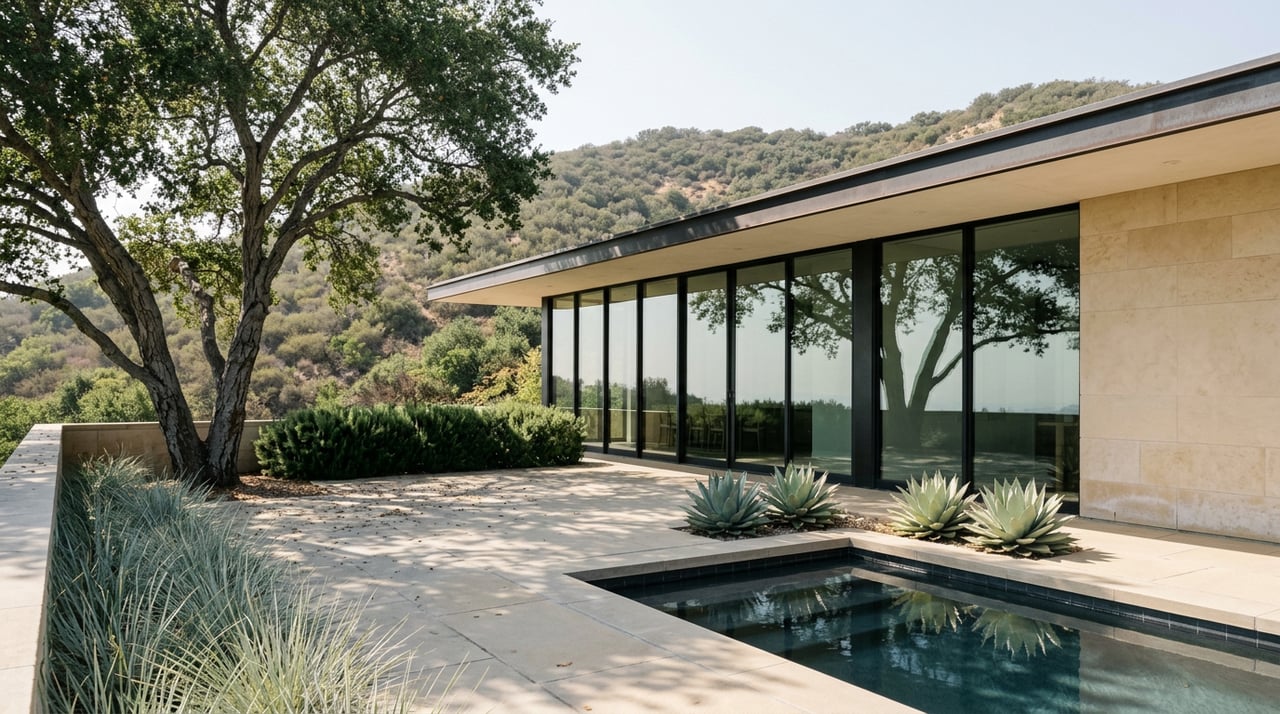
The hillside side of Brentwood offers a different kind of appeal. Here, the experience is shaped less by pedestrian-oriented planning and more by terrain, architecture, and access to open space.
The city plan states that hillside development should remain limited by circulation, infrastructure, and topography, while also preserving views from public lands and roadways. As a result, many hill areas feel quieter, more residential, and more dependent on a car for day-to-day errands.
Crestwood Hills is one of the clearest examples of Brentwood’s hillside character. It is described by the Crestwood Hills Association as an architecturally controlled neighborhood in the Brentwood hills, and the Los Angeles Conservancy traces its origins to a 1946 cooperative purchase of 800 acres in the Santa Monica Mountains.
That history helps explain why some hillside enclaves feel especially design-driven. If architecture is a major part of your home search, the hills may offer a more distinctive residential setting than you expect.
For many people, the hills stand out because of their relationship to nature and views. San Vicente Mountain Park offers 360-degree views and access to hiking, mountain biking, and equestrian trails, and it serves as a gateway to Westridge-Canyonback and the Big Wild area.
According to MRCA, Westridge-Canyonback includes more than 1,500 acres of open space. The National Park Service also notes that the Santa Monica Mountains contain more than 500 miles of public trails, ranging from short flat loops to steeper climbs.
This setting tends to create a more view-oriented daily rhythm. If you value privacy, outdoor access, and a calmer feel, the hills often align well with those priorities.
The biggest difference is not just the home itself. It is how your surroundings shape your routine.
In the flats, you are generally closer to Brentwood Village and the San Vicente corridor, where planning supports more street activity and easier access to neighborhood amenities. In the hills, the experience often shifts toward privacy, architecture, and open-space access, with less emphasis on on-foot errands.
Here is a simple way to think about the contrast:
| Lifestyle Factor | Brentwood Flats | Brentwood Hills |
|---|---|---|
| Daily rhythm | More village-adjacent and active | More private and quiet |
| Errands | Easier to combine nearby stops | More often car-dependent |
| Setting | Mixed residential fabric with civic amenities | Residential enclaves shaped by slope and views |
| Architecture | Varied, from estate-like areas to apartments | Often design-forward, especially in select enclaves |
| Outdoor access | Neighborhood parks and local amenities | Direct connection to trails and open space |
The right fit depends on how you want your life to feel after the move, not just what looks best in photos. A home in Brentwood’s flatter areas may suit you if you want easier access to the village core, a more connected neighborhood pattern, and a routine that includes local stops along the way.
A home in the hills may be a better fit if you are drawn to privacy, views, architectural character, and direct access to trail systems and open land. Neither option is inherently better. They simply support different priorities.
One of the most useful things to understand is that Brentwood does not divide into two neat boxes. The research shows it is better understood as a spectrum, with some lower areas that feel estate-like and low-slung rather than dense, and some hillside enclaves that are highly architectural and intentionally planned.
That is why micro-location matters so much here. Two homes with the same mailing address can support very different lifestyles depending on their relationship to the village, the boulevard, the hillside streets, or the trail network.
If you are buying or selling in Brentwood, this kind of nuance can shape everything from your shortlist to your pricing strategy. Working with someone who understands those distinctions can help you make a more confident decision. If you are exploring Brentwood’s micro-areas and want tailored guidance, connect with Renée Avedon.
Stay up to date on the latest real estate trends.